Five Common Mistakes When Reporting a Pothole or Streetlight Outage
Reporting a pothole should take a minute. Reporting a dead streetlight should take two. Yet plenty of repair requests sit untouched for months, and it is rarely because the crew is sitting around. More often the ticket itself was hard to act on: too vague to find, filed four times from the same phone, or sent to a department that has nothing to do with that stretch of road.
The good news is that the fixes are small and mostly free. A cross street, a pole number, a photo taken from a safe spot, and one polite follow-up call can be the difference between a filled hole and a crater you learn to steer around on your morning commute. Here are the mistakes that slow requests down, and what to do instead.
1. Describing the location as "somewhere on Main Street"
This is the most common reason a repair request stalls. "Main Street near the library" works fine if Main Street is two blocks long. On a mile-long arterial with three lanes in each direction, a crew drives past, sees six potholes, and has no idea which one you meant. The ticket either gets closed as "could not locate" or it sits open for weeks.
Give the address first, then work outward. The nearest building number, the cross street, the direction you were travelling, and the lane you were in. Then add a fixed landmark: a bus shelter, a fire hydrant, a painted crosswalk, the blue awning on the corner. Landmarks are more useful than directions because they don't depend on which way the crew approaches from.
For potholes, also describe what makes yours stand out from the others nearby. Is it in the travel lane or hugging the curb? Is it in a crosswalk, where it's a hazard to people walking? Rough size helps too — a dinner plate, a serving platter, a hole deep enough that your wheel drops hard.
What streetlight crews actually need
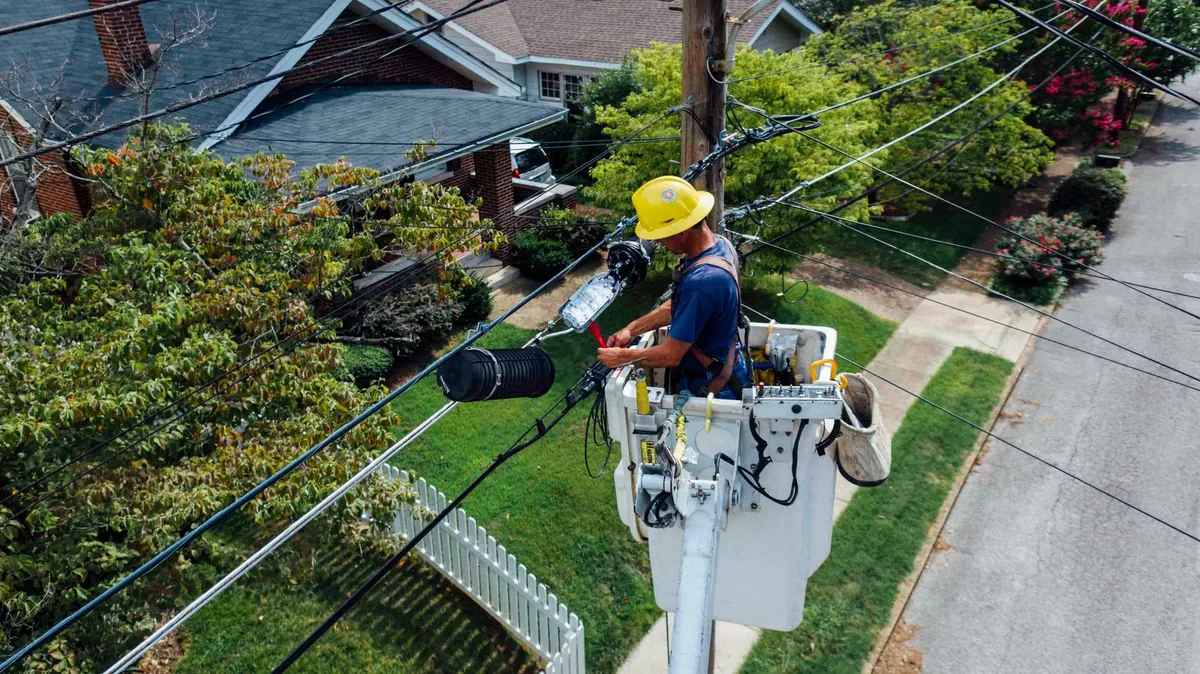
Streetlights are harder to spot in daylight than a pothole, so the description carries more weight. Look up the pole before you write the report. Many metal poles carry a small metal tag with a number stamped or printed on it. That tag is the fastest way to get the right fixture on the work list.
- The nearest street address and the cross street
- Which side of the street the pole is on, and which direction you face when looking at it
- The pole tag number, if there is one
- Whether the light is completely dark, flickering, or on during the day — each points to a different repair
- Whether the pole itself looks damaged, leaning or dented
- A landmark that will still be there in a month
2. Filing the same problem every day until something happens
It feels productive. It usually isn't. Most borough systems route new reports into the same queue, and repeated submissions from the same address get merged as duplicates. That merge takes staff time, which is exactly the resource you want pointed at the pothole instead of the paperwork.
There's a subtler problem too. When five tickets describe one pothole, the count no longer reflects reality. One ticket gets closed when the work is done and four stay open, or all five get closed at once and the report looks like a cluster of separate failures. Either way, the data your borough uses to prioritise streets gets muddier.
File once. Save the confirmation number. If you want to nudge things along, use that number rather than starting over.
3. Sending a photo that proves nothing
A blurry shot taken through a windscreen at speed shows grey asphalt and a slice of dashboard. It doesn't help anyone find the hole, and it doesn't show how deep it is. If you're going to attach a photo, make it count.
Park legally, get out, and stand on the pavement. Frame the hole with something permanent — the curb line, a driveway apron, a painted stripe, a parked car's tyre. Things like these give a crew a sense of scale and position that a close-up of tarmac never will. Daylight is better than flash, and a photo taken from the same direction a driver would approach is better than one taken from the opposite side.
For a streetlight, two photos beat one: a daytime shot of the pole and its tag, then a night shot from across the street showing your dark pole next to working lights. The contrast tells the story instantly.
Never step into a live traffic lane to take a photo. No repair request is worth that. If you can't get a safe angle, describe the location carefully instead.
4. Assuming the borough fixes every road and every pole
Not all streets are borough streets. State highways, county routes, private roads, apartment complexes, shopping centre car parks and some HOA streets are maintained by someone else. Streetlights are split in the same way: many are the borough's, but lights mounted on wooden utility poles are often the electric utility's responsibility.
Send a state road's pothole to the borough and somebody has to forward it, which adds days before anyone with a shovel even reads it. When you're unsure, ring the main borough number and ask which department looks after that particular stretch. It's a ninety-second call that can save a fortnight.
If you genuinely can't work out who owns it, report it to the borough anyway — but say so in the notes. "Not sure if this is a borough road, please forward if not" is far more useful than silence.
5. Treating "submitted" as "solved"
Most systems send an automatic acknowledgement and then go quiet. That silence isn't a decision, it's a queue. Reports get delayed, reassigned, or closed by mistake, and nobody notices because nobody is watching.
When you file, ask two questions: what's my reference number, and what's the usual turnaround for this kind of repair? Write both down. If the window passes with no work and no update, follow up once, by phone or email, quoting the reference number and the original date. Keep it short and factual — the location, the problem, the date you reported it.
If that gets you nowhere, the ladder usually runs: the department that owns the repair, then your ward councillor or the borough administrator, then a brief comment at a public meeting. Two sentences at a council meeting about an unresolved ticket tends to move faster than a tenth online form.
One exception to all of this: if the problem is a hazard right now — a hole deep enough to swallow a bike wheel, a leaning pole, exposed wiring, a missing cover — don't use the web form. Call. For anything sparking, smoking or hanging low, keep everyone clear and contact the emergency services and the utility.
A five-minute routine that gets results
None of this takes long if you do it in the right order. Next time you spot a problem, run through this:
- Check whether you've already reported it. Search your email for the street name before filing again.
- Stop somewhere safe and note the nearest address, cross street, direction of travel and a landmark.
- Look for a pole tag if it's a streetlight, and note whether the light is dark, flickering or on in daylight.
- Take one clear photo in daylight, framed with something permanent, from a safe position.
- Confirm you're reporting to the right place — or say in the notes that you're unsure.
- Write down the reference number and the expected turnaround before you close the tab.
- Follow up once when the window passes, quoting that number.
The reports that get fixed are the ones a crew can find, verify, and close without a phone call. Make yours one of those, and you'll spend less time dodging the same hole next month.
Photo: K / Pexels